History of the Ben Youssef Madrasa, from 1564 to Today
A Marinid foundation, a Saadian masterpiece, four hundred years of students and two restorations. The short version.
Book this visit
Some links are affiliate links: if you book, we may earn a commission at no extra cost to you. How this works
 Madrasa ticket paid on site
Offer 1
Bahia Palace and Ben Youssef Madrasa cultural tour
Bahia Palace, the Koutoubia and the madrasa at a low price, in groups of up to 30. Entries are paid on site.
- 4 hrs
- Free cancellation
Live guide: Arabic, English, French
From €11 per person · Nov 2026
Check dates — Bahia Palace and Ben Youssef Madrasa cultural tour, Viator (opens in a new tab) Our pick Madrasa ticket paid on site
Offer 2
Ben Youssef Madrasa 1-hour guided tour
An hour with a licensed guide who can read the inscriptions and tell the story on the spot.
- 1 hrs
- Skip the line
- Free cancellation
Live guide: English, Arabic
From €26 per person · Nov 2026
Check dates — Ben Youssef Madrasa 1-hour guided tour, Viator (opens in a new tab) Madrasa ticket included
Offer 3
Marrakech walking tour with Bahia Palace and Ben Youssef entry
Both entry tickets included, groups of 10 at most, guides in English or Spanish. Nothing to pay at the door.
- 3.5 hrs
- Small group
- Free cancellation
Live guide: English, Spanish
From €49 per person · Nov 2026
Check dates — Marrakech walking tour with Bahia Palace and Ben Youssef entry, Viator (opens in a new tab) Madrasa ticket included
Offer 4
Best of Marrakech: Bahia Palace and Ben Youssef Madrasa with tickets
Tickets for Bahia Palace and the madrasa included, groups of up to 12, bottled water. Meets at the Koutoubia.
- 3–4 hrs
- Small group
- Skip the line
- Free cancellation
Live guide: English, French
From €50 per person · Nov 2026
Check dates — Best of Marrakech: Bahia Palace and Ben Youssef Madrasa with tickets, Viator (opens in a new tab)Sorted by price, lowest first. Prices from the booking platform; the price at checkout is the one that counts.
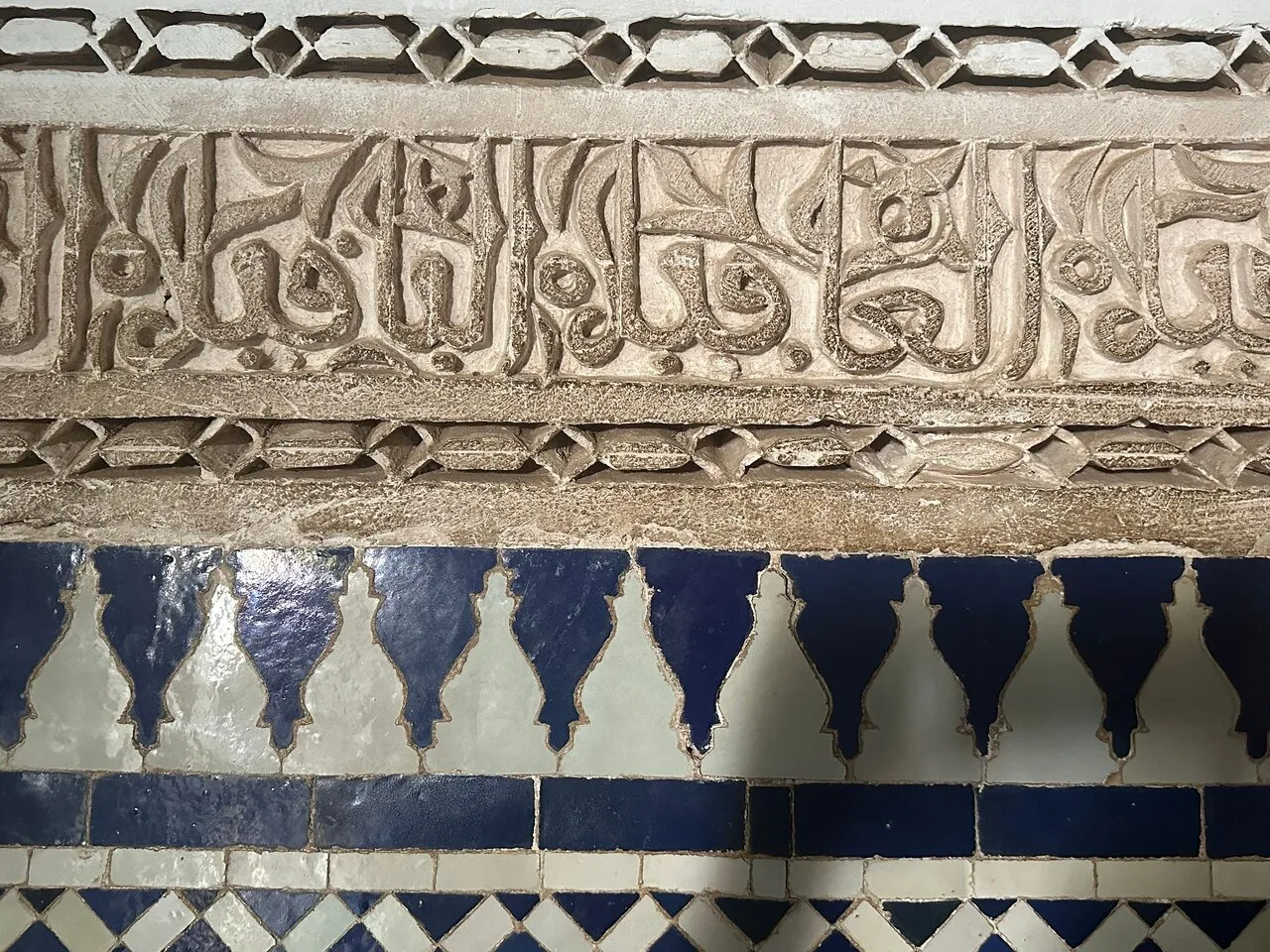
The Ben Youssef Madrasa you visit was built by the Saadian sultan Abdallah al-Ghalib in 1564–1565 (official history page). It replaced an earlier madrasa founded on the site by the Marinid sultan Abu al-Hasan (r. 1331–1348), and for four centuries it housed students of religious sciences, philosophy, medicine and mathematics.
In short
- 14th century: first madrasa on the site, under the Marinid sultan Abu al-Hasan (r. 1331–1348).
- 1564–1565: present building, under the Saadian sultan Abdallah al-Ghalib.
- 1960: closed as a school. 1982: opened as a monument.
- November 2018 to April 2022: closed for restoration, then reopened.
Timeline at a glance
-
1002–1007
A basin carved in Al-Andalus
At Madinat al-Zahra near Córdoba, craftsmen carve the marble basin that now stands in the prayer hall: the oldest object in the madrasa.
-
1106–1142
The Ben Youssef Mosque
The Almoravid sultan Ali ibn Yusuf founds the great mosque that gives the madrasa its name. Its ablutions pavilion, the Almoravid Koubba (around 1125), still stands next door.
-
14th century
The first madrasa
A first madrasa is founded on the site by the Marinid sultan Abu al-Hasan (r. 1331–1348).
-
1564–1565
The Saadian masterpiece
The Saadian sultan Abdallah al-Ghalib rebuilds the madrasa on a grand scale; an inscription dates its completion to 972 AH. It becomes the largest madrasa in Morocco, with 134 student rooms.
-
1565–1960
Four centuries of students
Students from across Morocco live in the small rooms and study religious sciences, philosophy, medicine and mathematics.
-
1960 · 1982
From school to monument
The madrasa closes as a school in 1960. Restored, it opens to the public as a historical monument in 1982.
-
2017
A royal visit
After the King’s visit to the old medina on 9 January 2017, the Ministry of Habous and Islamic Affairs launches a full restoration.
-
2018–2022
Restoration and reopening
Closed November 2018 to April 2022, the madrasa reopens every day, with tickets sold at the entrance. Today it welcomes more than 230,000 visitors a year.
A madrasa next to the great mosque
The madrasa takes its name from its neighbour: the Ben Youssef Mosque, founded by the Almoravid sultan Ali ibn Yusuf (r. 1106–1142) and rebuilt in later centuries (Wikipedia). The mosque was once the main mosque of Marrakech, and a college beside it was a natural place to train scholars.
The first madrasa here dates from the Marinid dynasty, founded by the Marinid sultan Abu al-Hasan (r. 1331–1348), a sultan who founded madrasas in several Moroccan cities.
The Saadian rebuilding
In the 16th century the Saadian dynasty made Marrakech its capital again. the Saadian sultan Abdallah al-Ghalib rebuilt the madrasa on a much grander scale; an inscription records its completion in 972 AH, 1564–1565. The result was the largest madrasa in Morocco, built around a single great courtyard with 134 rooms for students.
The decoration you see today belongs to that rebuilding: carved cedar, sculpted stucco, zellij tilework, marble and calligraphy, in the style that links Marrakech with Fez and Al-Andalus.
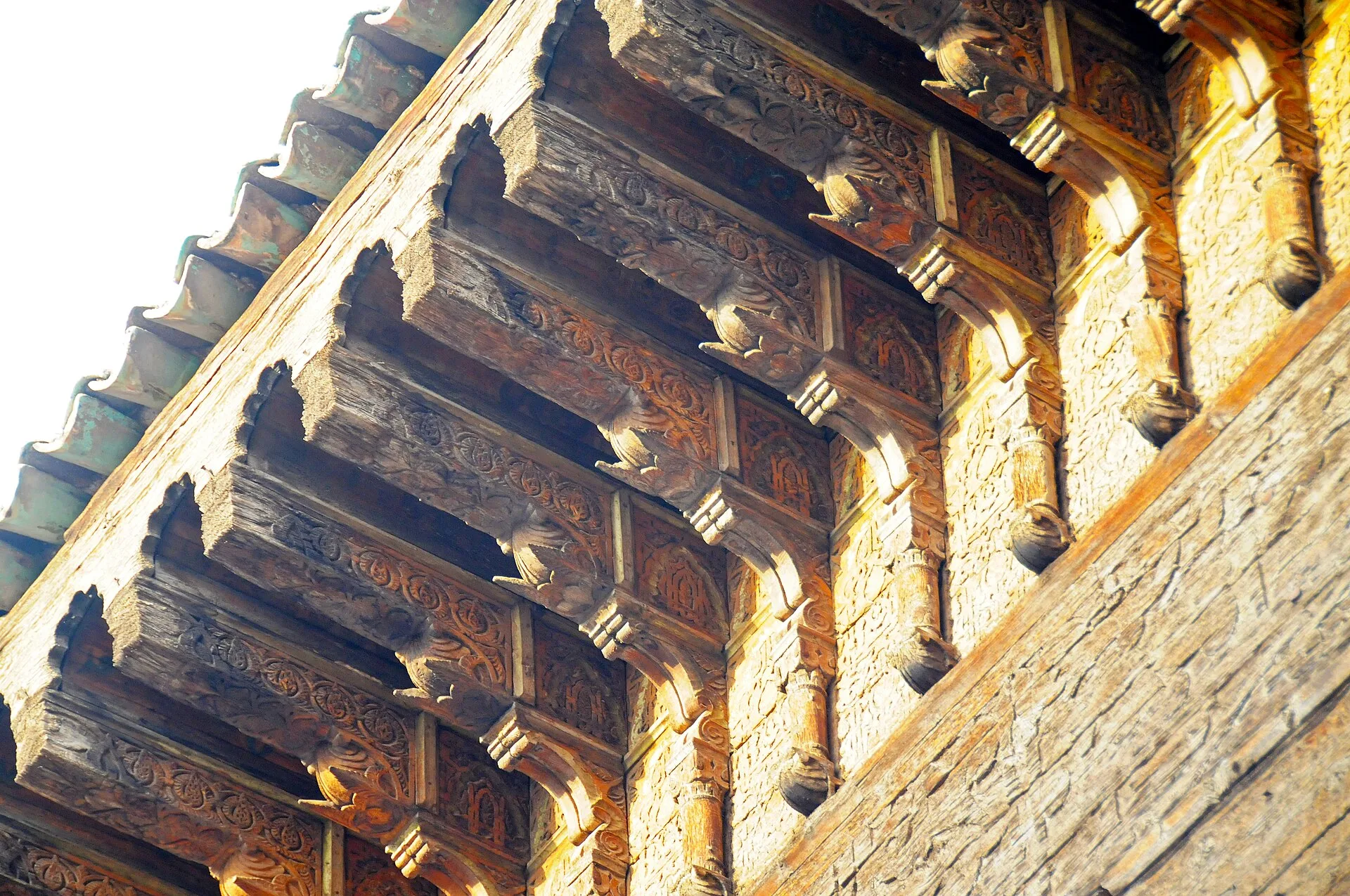
Four centuries of students
Students came from across Morocco and beyond to study religious sciences, philosophy, medicine and mathematics. They lived in the small rooms upstairs and around the side courtyards, and studied in the prayer hall and courtyard. The madrasa was a working college until 1960.
From school to monument
After it closed, the building was refurbished and opened to the public as a historical site in 1982. It became one of the most visited monuments in Marrakech: the official site now counts more than 230,000 visitors a year.
The latest restoration (2018–2022)
Following the King’s visit to the old medina on 9 January 2017, the Ministry of Habous and Islamic Affairs undertook a full restoration (official restoration page). The madrasa was closed from November 2018 to April 2022. Since reopening, tickets are sold at the entrance and the building is open every day.
The basin that is older than the building
The oldest piece in the madrasa is a marble basin: a marble basin carved in Córdoba’s Madinat al-Zahra between 1002 and 1007, with a Kufic inscription naming Abd al-Malik, son of the vizier al-Mansur, and carvings of birds and fish. How it reached Marrakech is told differently by different sources; the official site says it was brought from Al-Andalus by the Almoravid ruler Youssef Ben Tachfine.
See the building room by room in what to see inside, or the oldest monument in the area, the Almoravid Koubba, in what to see nearby.
Questions people ask
Who built the Ben Youssef Madrasa?
The present building was erected by the Saadian sultan Abdallah al-Ghalib in 1564–1565. The first madrasa on the site was founded by the Marinid sultan Abu al-Hasan (r. 1331–1348).
How old is the Ben Youssef Madrasa?
The building you visit was completed in 1564–1565, so it is more than 460 years old. A madrasa stood on the site from the 14th century.
When did the Ben Youssef Madrasa stop being a school?
It closed as a school in 1960 and opened to the public as a historical monument in 1982.
Why is it called Ben Youssef?
It takes its name from the neighbouring Ben Youssef Mosque, founded by the Almoravid sultan Ali ibn Yusuf in the 12th century.